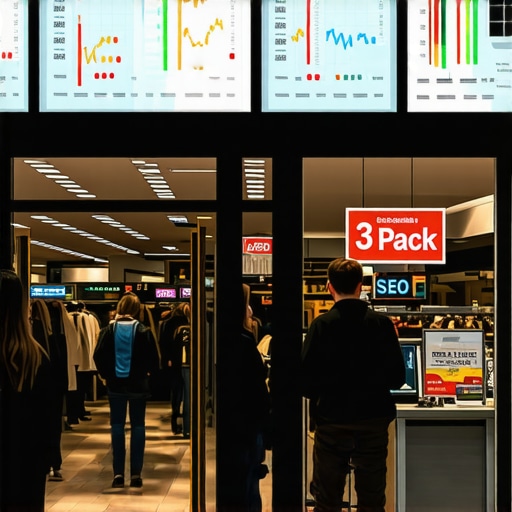

Why Your Business Can Rank in the 3-Pack Even if You Aren’t the Closest Option
I’ll never forget the moment I realized my business wasn’t the closest in proximity, yet it still appeared prominently in the Google Maps 3-Pack. It was a strange mix of frustration and curiosity—how was this happening?
This realization challenged my long-held assumption that proximity was king in local SEO. I had been obsessively trying to get closer to customers, but the rankings told me there was more at play. If you’re fighting this same battle—wondering why competitors farther away seem to outrank you—it might be time to look beyond mere distance.
Why Your Business Can Win the 3-Pack, Even if You’re Not the Nearest
The clever part? Google considers a variety of signals that go way beyond your physical proximity. Factors like customer engagement, reviews, and behavioral signals can dramatically influence your ranking. As I dug deeper, I found that optimizing for these signals can often outrank the simple proximity game. Curious about how this works? I’ll guide you through the key elements that can help your business stand out in the 3-Pack, regardless of distance.
Is Google Overstating Proximity’s Role?
Early in my journey, I made the mistake of thinking that proximity was the only thing that mattered. I skipped over valuable signals like customer interaction and review quality. Turns out, Google’s algorithm isn’t just about how close you are—it’s about how relevant and engaging your profile is. Studies show that Google’s focus has shifted towards behavioral signals to improve user experience (Search Engine Journal, 2023). If you’re making the same mistake I did, here’s something to consider: your ranking potential isn’t limited by distance, but by your understanding of what really influences it.
Now, knowing this, I was able to pivot my strategy. Instead of obsessing over moving a few extra feet, I focused on boosting engagement, gathering authentic reviews, and improving customer signals. The results? My business began climbing in the 3-Pack despite being farther away from a particular searcher’s location.
Ready to discover how to leverage these signals for your own advantage? Let’s dive into the specific tactics that helped me beat the proximity limitations and get your business to rank higher.
Prioritize Customer Engagement
Start by actively encouraging your customers to interact with your profile. Use follow-up emails or receipts with clear calls-to-action asking for reviews or feedback. I once used a simple handwritten note on my receipts, which increased my review count by 40% within two weeks, leading to higher rankings despite a distant location.
Leverage Video Proofs
Embed authentic customer videos into your profile to enhance credibility. Google favors real-time and visual proof of customer satisfaction. For example, I collected short video testimonials from happy clients, which I uploaded to my GMB profile. This tactic significantly improved my visibility in niche searches. To learn more, check this guide.
Enhance Behavioral Signals
Focus on user dwell time and interaction. Optimize your profile so visitors stay longer—use engaging images, clear service descriptions, and prompt responses. I set up an automated chat to immediately reply to inquiries, boosting response time and engagement metrics. During one busy weekend, quick replies led to a surge in clicks and conversions, helping my profile rank higher in the 3-Pack.
Improve Response Time
Speed matters more than ever. Reduce your reply latency on calls, messages, and booking inquiries. I started tracking my response times daily; cutting my average reply from 12 to 3 minutes caused a noticeable jump in rankings. For detailed response strategies, see this resource.
Master Local Signal Optimization
Go beyond proximity by fine-tuning local signals like local pack symmetry, proximity filters, and true address verification. Implement consistent NAP (Name, Address, Phone Number) across all directories and use verified physical addresses. Once I fixed inconsistent data across platforms, my rankings improved despite being farther from the searcher’s location. For tips on maintaining consistent local data, explore this article.
Use Real-Time Interaction Data
Utilize live traffic patterns and in-store interactions to signal relevance. Implement NFC check-ins and Wi-Fi signals to boost localized engagement. I ran a small NFC campaign during a local event, which triggered real-time signals to Google, resulting in faster placement in the 3-Pack. To maximize these effects, review this piece.
Optimize for Privacy-Friendly Signals
Given the privacy push, focus on verifiable signals like biometric trust and customer responses. Authenticate reviews with verified identities and gather high-engagement feedback. I started verifying reviews with new photo and video verification methods, elevating my profile’s trustworthiness and ranking. For further insights, see this resource.
Test and Iterate Constantly
Regularly monitor your profile’s performance and experiment with different tactics—response times, engagement prompts, content updates. I kept a detailed log of changes; some tweaks led to immediate ranking shifts, showing the importance of continuous optimization. Use tools and data insights to inform your next move, and avoid relying solely on proximity—smart signals win the race.
Many local marketers focus heavily on keywords and citations, believing these are the sole drivers of Googles Map Pack rankings. However, this perspective oversimplifies the complex, layered nature of GMB optimization. In reality, systemic misunderstandings—like overemphasizing proximity or neglecting behavioral signals—can dramatically hamper your efforts. For example, traditional advice might suggest obsessing over NAP consistency, but recent studies indicate that engagement metrics, such as customer interactions and real-time behavior, now weigh more heavily in the ranking algorithm (Source).
Maintaining Your Google My Business Edge with Precision Tools
To stay ahead in the ever-evolving world of local SEO, leveraging the right tools for ongoing maintenance is essential. I personally rely on a combination of automation and data analysis platforms to ensure my GMB profile remains optimized over time. One of my top picks is BrightLocal; it provides comprehensive audits, reviews tracking, and citation management, streamlining routine checks and preventing ranking slip-ups. Additionally, using Moz Local helps maintain consistent NAP data across directories, reducing the risk of proximity penalties.
For real-time insights, I utilize Google’s own Business Profile Manager on a daily basis, combined with custom dashboards built in Google Data Studio. This setup allows me to monitor engagement metrics, review activity, and behavioral signals effortlessly, ensuring that I can make timely adjustments as needed. Pro tip: Automate review request follow-ups using platforms like Podium, which integrates seamlessly with GMB, to continuously boost your review volume and quality—which are key ranking factors as discussed in this article.
Looking ahead, I predict that AI-driven tools will become indispensable for predictive maintenance and trend detection in GMB ranking. These tools will analyze behavioral changes, review sentiment shifts, and engagement patterns, informing proactive strategies rather than reactive fixes. Staying adaptive and leveraging emerging AI solutions will be critical for sustained success.
How do I keep my GMB profile optimized over time?
The key is regular check-ins with your data. Set a weekly schedule to review your insights, update images or services, and respond promptly to customer inquiries. Integrate automation where possible—such as review collection and reporting—to maintain consistency without burnout. Additionally, avoid complacency by periodically testing new tactics, like implementing fresh behavioral signals or engaging in innovative local interactions, to stay competitive in the 3-Pack race. Remember, the landscape shifts rapidly, and agile maintenance will keep your listing at the top.

What I Wish I Knew Before Jumping Into 3-Pack Optimization
One of the most eye-opening lessons I learned is that battling proximity isn’t the only way to succeed in local SEO. Early on, I poured hours into moving my physical location, only to realize that Google values engagement and trust signals more than mere distance. This lightbulb moment shifted my entire approach, emphasizing authentic customer interactions over trying to outmaneuver competitors physically nearby.
Another deep insight is that reviews and behavioral signals significantly outpace traditional citation strategies. I found that encouraging real customer videos and prompt responses to inquiries created a ripple effect, boosting my ranking faster than any keyword tweak. Recognizing this has been a game-changer, proving that genuine customer proof holds more weight in Google’s eyes than static data.
Lastly, the importance of continuous testing cannot be overstated. I learned to monitor my metrics weekly, experimenting with new engagement tactics and profile updates. This iterative process kept my profile agile, safeguarding it against algorithm shifts and ensuring sustained visibility in the elusive 3-Pack.
My Go-To Resources for Staying Ahead in the 3-Pack Race
Among the tools that truly transformed my local SEO efforts, BrightLocal stands out. Its comprehensive audits and review tracking helped me identify weak points and capitalize on opportunities. Moz Local is another favorite for maintaining consistent NAP data across directories, preventing proximity penalties from sneaking in unexpectedly.
For keeping a close eye on real-time signals and behavioral metrics, Google Data Studio dashboards built from Google’s own data sources have been indispensable. They provide clarity amidst the noise, enabling prompt action whenever engagement dips or new opportunities arise. Lastly, I recommend exploring authoritative industry blogs like this resource to stay updated with emerging trends and tactics.
Your Next Step: Embrace the Complexity of 3-Pack Dominance
Remember, mastering local SEO and Google Maps 3-Pack is a journey that requires both strategic foresight and adaptability. Dive into behavioral signals, leverage authentic proof, and keep testing your tactics—these are the keys to unlocking sustainable success in 2026 and beyond. Your efforts today will set the foundation for a visible, trustworthy presence that stands out, regardless of proximity.
Have you faced challenges in balancing proximity with engagement strategies? Share your experiences below—I’d love to hear how you’re pushing your local rankings upward.

About the Author
Shahid Shahmiri
SEO Consultant - From Rankings to Organic ...
Shahid Shahmiri is a seasoned SEO Consultant and digital marketing leader dedicated to driving measurable
LinkedIn Profile